
IMPACT VERIFICATION TOOLKIT
Lean impact verification for Impact-Linked Finance
Verifying impact with confidence, in proportion to what is at stake
When funders pay for impact, they need confidence that the results they reward are real. Impact evaluations are often too costly for early- and growth-stage enterprises, while self-reported results offer little assurance. The IMPACT VERIFICATION TOOLKIT sets out a lean path between the two. It draws on the B-Briddhi programme in Bangladesh, where between 2020 and 2026 every Impact-Linked Finance payment rested on independently verified results. The Toolkit offers five Impact Verification Principles, a menu of lean, medium and high verification options, and step-by-step guidance for funders, fund managers, verifiers and the enterprises whose data underpins every verified result.
What’s inside the Toolkit
Chapter 1: Lean Verification Principles
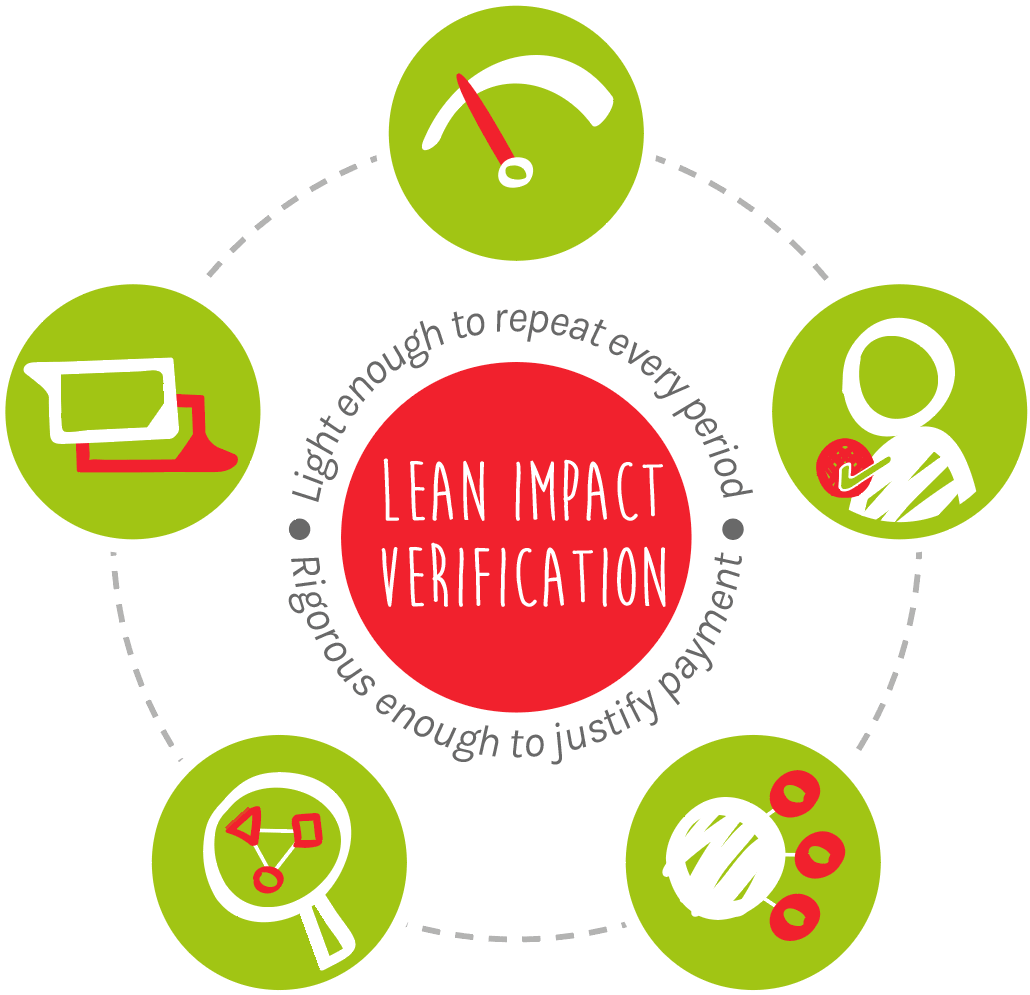
Five Impact Verification Principles set the minimum standard for checking results before an incentive is paid. Verifications should match rigour to what is at stake, judge independently, check systems before numbers, trace and triangulate every figure, and resolve discrepancies openly.

Chapter 2: Verification Set-up and Design
Most decisions that make a verification credible and affordable are taken before the verifier is contracted. This chapter offers a menu of lean, medium and high options for each verification activity, with guidance on budgeting, sample sizes, verified baselines and contracting and onboarding verifiers.

Chapter 3: Verification Implementation
This chapter introduces the five-step methodology applied to every SIINC verification in B-Briddhi, from the IMM Systems Check and customer interviews to independent recalculation, triangulation and the verification report. It also explains how to resolve inconsistencies in enterprise data transparently, and what enterprises can do to submit verification-ready data.

Chapter 4: Conducting an IMM Systems Check
This chapter delves into how to assess whether an enterprise’s people, processes and systems can produce reliable impact data, using a scorecard adapted from the DCED Standard for Results Measurement. It also includes information on how to run the assessment in practice, what it revealed across the B-Briddhi SIINC portfolio, and alternative frameworks verifiers can use.

Chapter 5: Customer Interview Guidance
Customer voices are the most direct test of whether reported results reflect real change. A five-step approach to selecting respondents at random, obtaining consent, linking questions to incentivised metrics, interviewing neutrally and recording findings, with practical tips on gender sensitivity.

Chapter 6: Reporting, Disbursement and Monitoring
The final stretch of each verification cycle: concise reports that lead with the verified result, a predictable disbursement process and follow-up monitoring between measurement periods. Includes a recommended report structure and the Apon Bazaar case study on how verifications shed light on women customers.