
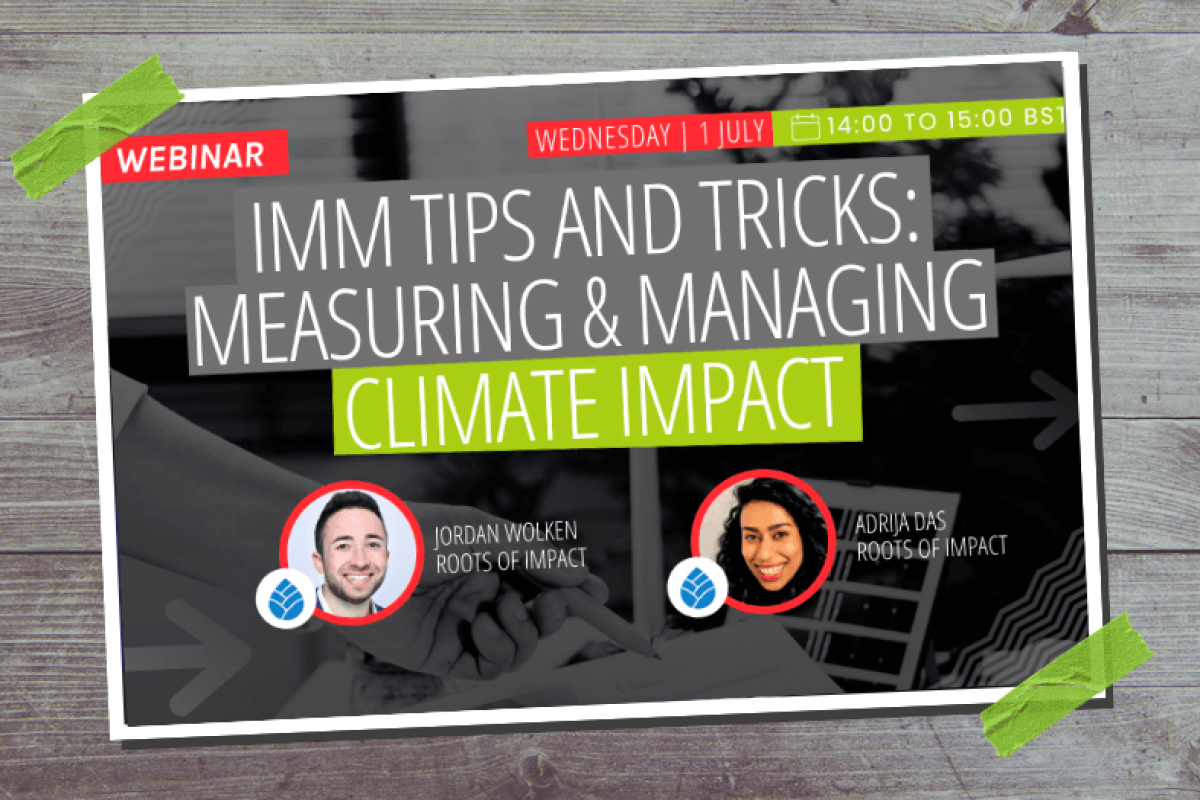
Climate IMM Tips and Tricks: Equipping Impact Enterprises to Measure and Manage Environmental Impact
On Wednesday, 1st July 2026, Biniyog Briddhi hosted “IMM Tips and Tricks: Measuring and Managing Climate Impact,” an interactive online webinar focused on how impact enterprises and service providers in Bangladesh can measure and manage environmental impact data. The one-hour session was led by Jordan Wolken, Senior Associate, Impact Management, and Adrija Das, Manager, Impact Management, both from Roots of Impact. Adrija opened with a short overview of the B-Briddhi programme, after which Jordan guided participants through the fundamentals of getting started with climate-centric Impact Measurement and Management (IMM).

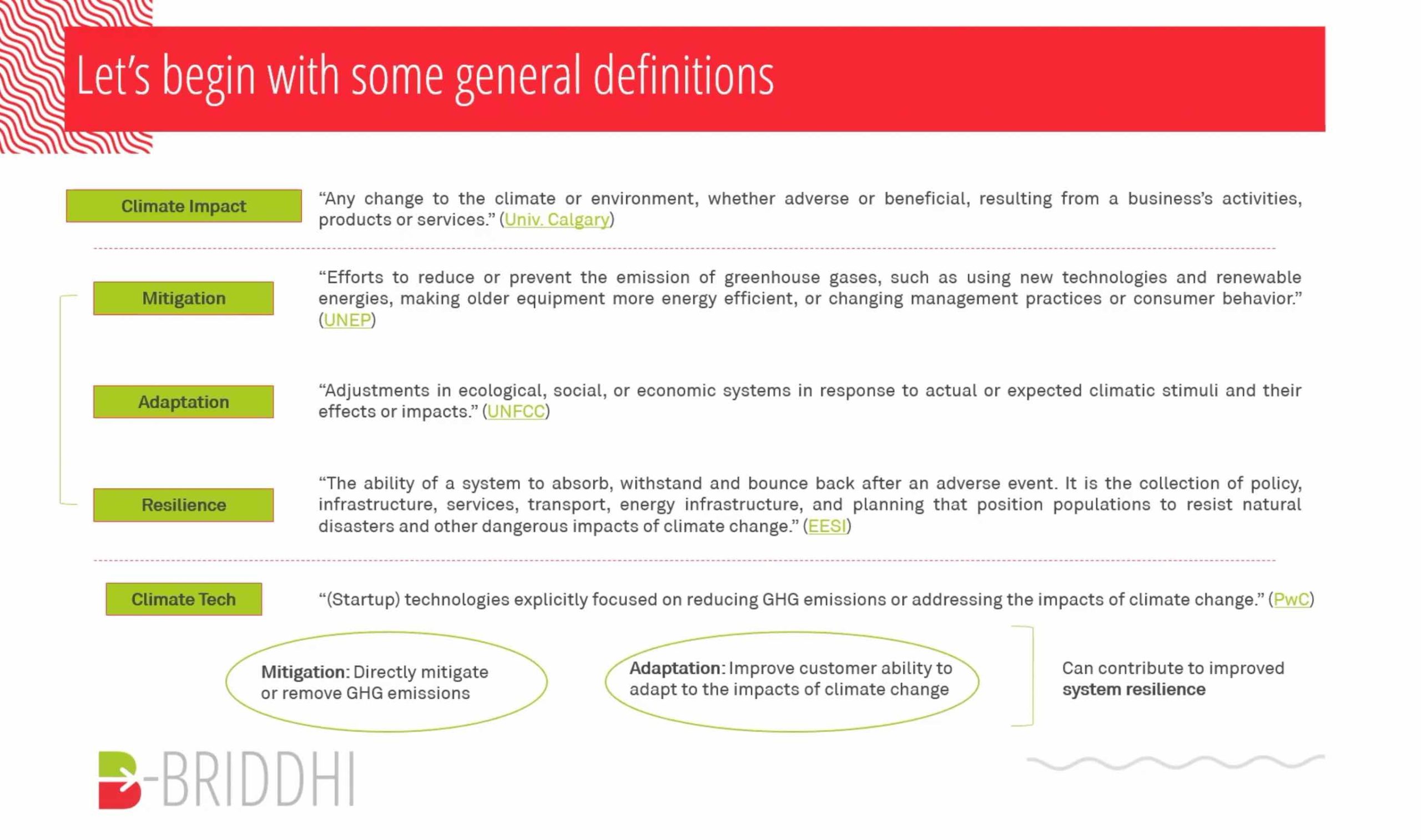
Setting the scene, Jordan noted, “In many reports, Bangladesh has been described as the world’s most vulnerable country to climate-induced change; consequently, there’s a lot of increased attention and resources now being allocated to address this situation, both from domestic and foreign sources. However, all of this money and goodwill put together is not enough, and we do need more solutions to enter the market and create impact at a faster pace.”
Key takeaways from the session:
- Getting started is easier with the right tools: The session introduced practical, accessible tools tailored to impact enterprises in Bangladesh, helping participants – at any commercial stage – take their first steps on the climate IMM journey without being overwhelmed.
- Local case studies bring climate IMM to life: By drawing on real examples of enterprises already applying climate IMM on the ground, the session showed participants what good practice looks like in a Bangladeshi context and how to learn from their peers.
- Environmental data is a commercial asset, not just a reporting exercise: A central message was that well-managed environmental impact data can be turned into a tangible commercial advantage, strengthening credibility with investors and unlocking new opportunities.
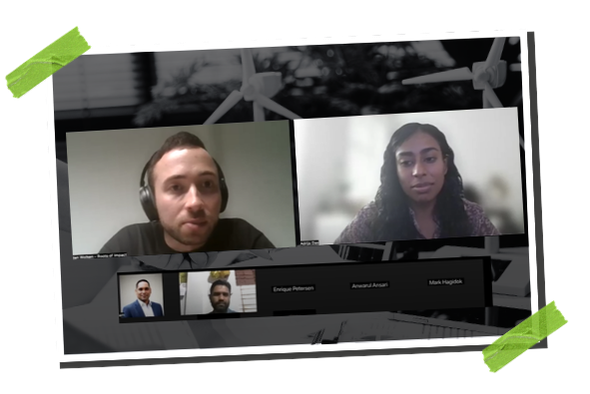
The webinar wrapped up with a Q&A, where participants brought forward practical questions rooted in their own enterprises. One asked how climate impact measurement could become a revenue-generating tool rather than just a reporting requirement, particularly through carbon finance, impact investment, and new market opportunities for circular economy solutions.
Jordan highlighted, “Most impact investors will still want to look primarily first at commercial viability and then impact secondarily, so make sure that your business is strong on the financials and you have sufficient traction, and also some impact that’s being generated that can be proved with the data that you’re collecting.”
Building on the theme of monetization, another question explored how enterprises with a circular economy focus can begin turning their climate impact into carbon finance.
Adrija advised, “Once your operations are at a scale wherein you feel that you’re able to reduce emissions by at least 30,000 tons of CO2 per year, that would be a good point for you to start thinking about monetizing the project; speaking to carbon project developers would be a great first point for you to understand how you can get to that stage.”
The session helped participants obtain a clearer understanding that climate IMM is not merely a reporting obligation but a strategic advantage, one that can strengthen credibility, attract the right investors, and unlock new commercial opportunities. Above all, the discussion underscored a reassuring message: even small, practical steps toward better environmental data practices can have a disproportionately positive impact on an enterprise’s trajectory.
About the Biniyog Briddhi Programme
B-Briddhi is a gender-inclusive programme supporting a thriving impact ecosystem in Bangladesh where impact enterprises can grow and scale. This programme is supported by the Embassy of Switzerland in Bangladesh and implemented by Roots of Impact and LightCastle Partners.